What is AGM battery?
AGM stands for Absorbent Glass Mat, which is a type of maintenance-free, sealed lead-acid battery. In AGM battery, the electrolyte is absorbed into fiberglass mats sandwiched between the battery’s lead plates. This design helps to immobilize the electrolyte and prevent it from spilling, even if the battery case is broken.
AGM batteries are known for their high power density, fast recharge rates, and resistance to vibration, making them popular choices for applications such as automotive, marine, and renewable energy systems. They are often used in vehicles with start-stop systems, motorcycles, boats, RVs, and backup power systems.
Development of AGM battery
The development of the AGM battery was a collaborative effort among several companies and researchers in the mid-20th century.
AGM technology continued to evolve, and by the 1970s and 1980s, AGM batteries started to find applications in commercial and industrial sectors, particularly in telecommunications, UPS (Uninterruptible Power Supply) systems, and emergency lighting due to their reliability and maintenance-free operation.
In the 1990s, AGM batteries became more widespread in the automotive industry. They were utilized in vehicles with advanced electrical systems and start-stop technology due to their ability to provide high cranking power, fast recharging, and resistance to vibration.
What is the AGM battery’s internal structure?
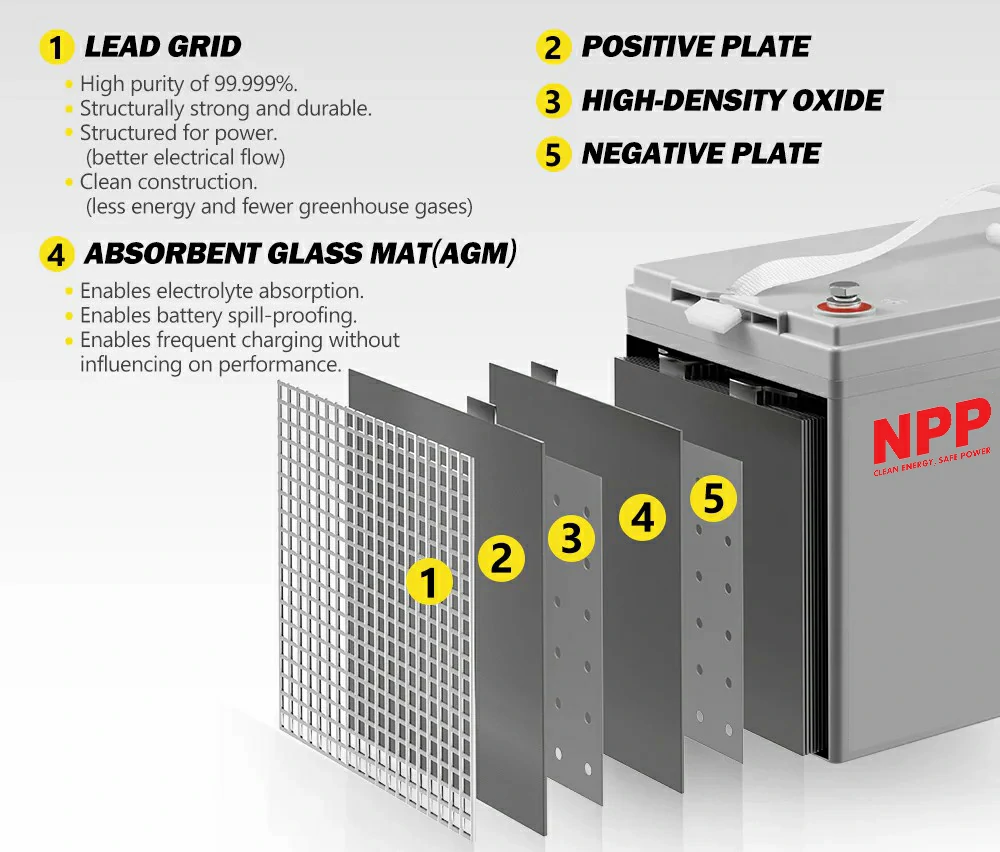
The internal structure of an AGM battery consists of several key components:
- Lead Plates: AGM batteries contain lead plates, which serve as the positive and negative electrodes. These plates are typically made of a lead-calcium alloy to improve their durability and reduce water loss during charging.
- Absorbent Glass Mat (AGM): AGM batteries feature a fiberglass mat separator that is saturated with electrolyte (usually sulfuric acid). This mat is placed between the lead plates and acts as a sponge to hold the electrolyte in place, preventing spillage and allowing for a maintenance-free design.
- Electrolyte: The electrolyte in AGM batteries is typically sulfuric acid (H2SO4), which is absorbed into the fiberglass mat. This electrolyte facilitates the electrochemical reactions that occur during battery discharge and recharge cycles.
- Battery Case: The battery case houses all the internal components and provides physical protection and containment for the electrolyte and other materials.
What is the AGM battery’s main application?
AGM batteries are versatile energy storage solutions suitable for a wide range of applications where reliability, durability, and maintenance-free operation are essential requirements.
Some of the main applications of AGM batteries include:
- Automotive: AGM batteries are commonly used in vehicles with advanced electrical systems, start-stop technology, and those requiring high cranking power. They are popular in cars, trucks, buses, and other vehicles where reliability and performance are essential.
- Marine: AGM batteries are well-suited for marine applications due to their resistance to vibration, shock, and corrosion. They are used in boats, yachts, and other marine vessels to power electrical systems, navigation equipment, and onboard appliances.
- Recreational Vehicles (RVs): AGM batteries are often used in RVs, motorhomes, and camper trailers to provide reliable power for lighting, appliances, entertainment systems, and auxiliary equipment. Their maintenance-free design makes them ideal for use in recreational vehicles.
- Renewable Energy Systems: AGM batteries are utilized in off-grid and grid-tied renewable energy systems, such as solar power and wind power installations. They store energy generated from renewable sources for later use, providing backup power during periods of low generation or grid outages.
- Telecommunications: AGM batteries are commonly used in telecommunications infrastructure, such as cell towers, base stations, and remote communication facilities. They provide backup power to ensure continuous operation in the event of a power outage or grid failure.
- Emergency Lighting and UPS (Uninterruptible Power Supply) Systems: AGM batteries are employed in emergency lighting systems and UPS systems to provide backup power for critical loads in buildings, facilities, and industrial applications. They ensure uninterrupted operation during power outages or transient voltage fluctuations.
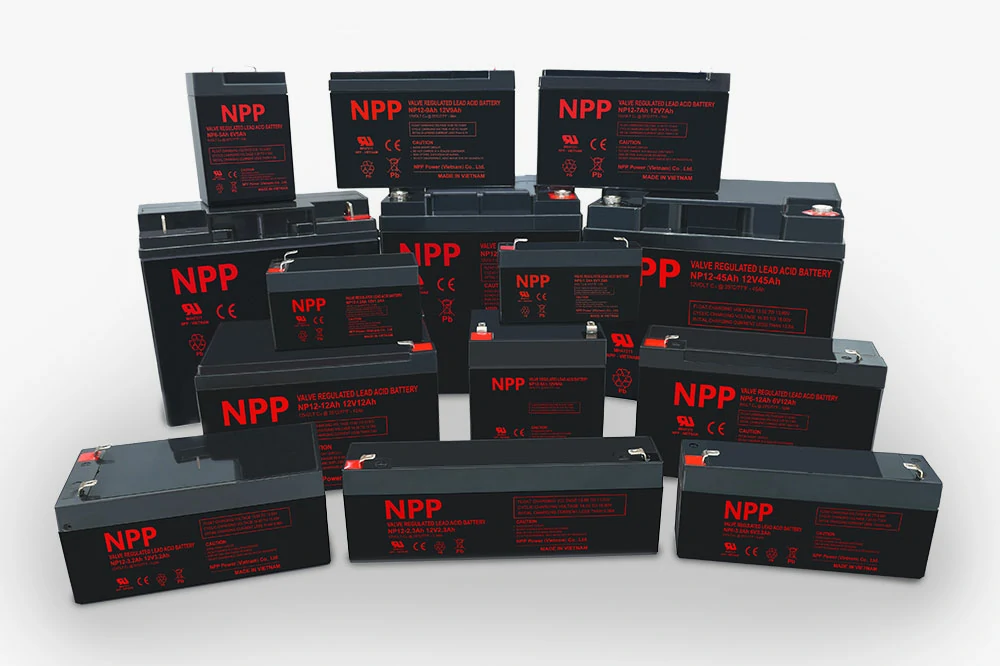
The NPP AGM battery series has been in the field of backup power, communication, security, and UPS for more than 20 years, if you are looking for a reliable brand, please contact us.
What are the differences between AGM batteries and traditional Flooded batteries?
AGM batteries offer advantages such as maintenance-free operation, higher performance, and better resistance to environmental factors compared to flooded batteries. However, flooded batteries may be preferred in certain applications where cost is a significant factor, and regular maintenance can be accommodated.
Construction:
- AGM Battery: AGM batteries feature a fiberglass mat separator saturated with electrolyte (usually sulfuric acid) between the lead plates. The electrolyte is absorbed into the fiberglass mat, immobilizing it and preventing spillage.
- Flooded Battery: Flooded lead-acid batteries contain liquid electrolyte (sulfuric acid and water) that freely flows between the lead plates. The plates are submerged in the electrolyte, and the battery must be kept upright to prevent leakage.
Maintenance:
- AGM Battery: AGM batteries are maintenance-free, as they do not require topping up with water or electrolyte throughout their service life. The sealed design minimizes electrolyte evaporation and water loss.
- Flooded Battery: Flooded batteries require regular maintenance, including checking electrolyte levels, topping up with distilled water, and ensuring proper ventilation to prevent gas buildup.
Performance:
- AGM Battery: AGM batteries offer faster recharge rates, higher power density, and lower self-discharge rates compared to flooded batteries. They also have better resistance to vibration, shock, and temperature extremes.
- Flooded Battery: Flooded batteries typically have lower initial cost compared to AGM batteries but may require more frequent maintenance. They are less resistant to vibration and may have higher self-discharge rates.
Applications:
- AGM Battery: AGM batteries are suitable for applications where maintenance-free operation, high power density, and resistance to vibration are required. They are commonly used in automotive, marine, RV, renewable energy, telecommunications, and UPS systems.
- Flooded Battery: Flooded batteries are often used in applications where initial cost is a primary consideration, and regular maintenance can be performed. They are commonly found in automotive, industrial, and stationary power applications.
What are the advantages of AGM battery?
AGM batteries offer a combination of convenience, reliability, and performance that makes them well-suited for various applications where traditional flooded batteries may not be practical or desirable.
- Maintenance-Free Operation: AGM batteries are sealed and do not require periodic watering or electrolyte maintenance like flooded batteries. This makes them convenient and easy to use, particularly in applications where access for maintenance is limited or impractical.
- Minimal Risk of Acid Spillage: The absorbent glass mat separator in AGM batteries immobilizes the electrolyte, reducing the risk of acid spillage even if the battery case is damaged. This feature enhances safety and reduces the risk of damage to equipment and surroundings.
- Vibration and Shock Resistance: AGM batteries are constructed with a robust design that makes them highly resistant to vibration and shock. This makes them suitable for use in vehicles, marine applications, and other environments where mechanical stress is a concern.
- Fast Recharge Rates: AGM batteries can accept high charge currents and have lower internal resistance compared to flooded batteries, allowing for faster recharge rates. This makes them well-suited for applications where rapid recharging is necessary, such as in vehicles with start-stop systems or renewable energy systems.
- High Power Density: AGM batteries offer high power density, meaning they can deliver a large amount of electrical power relative to their size and weight. This makes them ideal for applications where space and weight are limited, such as in vehicles, boats, and portable equipment.
- Versatility: AGM batteries are suitable for a wide range of applications, including automotive, marine, RV, renewable energy, telecommunications, and UPS systems. Their versatility, combined with their high performance and maintenance-free operation, makes them a preferred choice for many different uses.
What are the disadvantages of AGM battery?
it’s essential to consider these limitations when selecting a battery for a specific application and to implement proper maintenance and charging practices to maximize the battery’s lifespan and performance.
- Limited Cycle Life: While AGM batteries offer good cycle life compared to flooded lead-acid batteries, they generally have a lower cycle life compared to some other battery chemistries, such as lithium-ion. Frequent deep discharges can further reduce the battery’s cycle life.
- Sensitive to Overcharging: AGM batteries are sensitive to overcharging, which can lead to reduced battery life and performance. Proper charging voltage and current limits must be maintained to avoid damaging the battery.
- Higher Cost: AGM batteries typically have a higher upfront cost compared to flooded lead-acid batteries. This higher cost may be a barrier to adoption for some users, particularly in applications where budget constraints are a concern.
How to troubleshoot common AGM Battery problems?
- By following these troubleshooting steps, you can identify and address common AGM battery problems, ensuring optimal performance and reliability in various applications.
- Symptom Identification: Identify the specific symptoms or problems you are experiencing with the AGM battery, such as reduced capacity, slow cranking, voltage drop, or failure to hold a charge.
- Visual Inspection: Conduct a visual inspection of the battery, checking for signs of physical damage, leakage, corrosion on terminals, or loose connections. Ensure the battery is securely mounted and properly ventilated.
- Voltage Check: Use a digital multimeter to measure the battery voltage when it is at rest (no load). A fully charged AGM battery should have a resting voltage of around 12.6 to 12.8 volts.
- Load Testing: Perform a load test on the battery using a battery load tester. This test applies a load to the battery while measuring voltage drop to assess its capacity and performance under load conditions.
- Charging System Check: Check the charging system (alternator, voltage regulator, and wiring) to ensure it is functioning correctly and delivering the proper charging voltage to the battery. Measure voltage at the battery terminals while the engine is running to verify charging voltage (typically around 13.8 to 14.4 volts).
- Electrolyte Level Check: If the AGM battery has removable cell caps (some do), check the electrolyte level. Add distilled water if necessary to maintain proper electrolyte levels, although most AGM batteries are maintenance-free and do not require electrolyte replenishment.
- Temperature Check: Measure the ambient temperature around the battery. Extreme temperatures can affect battery performance and lifespan. Ensure the battery is not exposed to excessive heat or cold.
- Equalization Charging: If the battery exhibits signs of sulfation (reduced capacity, slow charging), consider performing an equalization charge according to the manufacturer’s recommendations. This process can help dissolve sulfate crystals and restore battery performance.
- Replacement: If the AGM battery consistently fails load tests, exhibits significant voltage drop under load, or shows other signs of failure, it may need to be replaced. Ensure the replacement battery meets the specifications and requirements of the application.
- Professional Assessment: If troubleshooting steps do not resolve the issue or if there are concerns about the battery’s condition, consider seeking assistance from a professional technician or battery specialist for further diagnosis and evaluation.
How many years does AGM battery last?
The lifespan of an AGM battery typically ranges from 4 to 7 years under normal operating conditions. However, it’s essential to note that the actual lifespan can vary depending on several factors, including Usage Patterns, Operating Conditions, Quality of Battery, Environmental Factors, etc.
While AGM batteries are known for their durability and reliability, it’s essential to monitor their condition regularly and replace them when signs of deterioration or decreased performance are observed.